
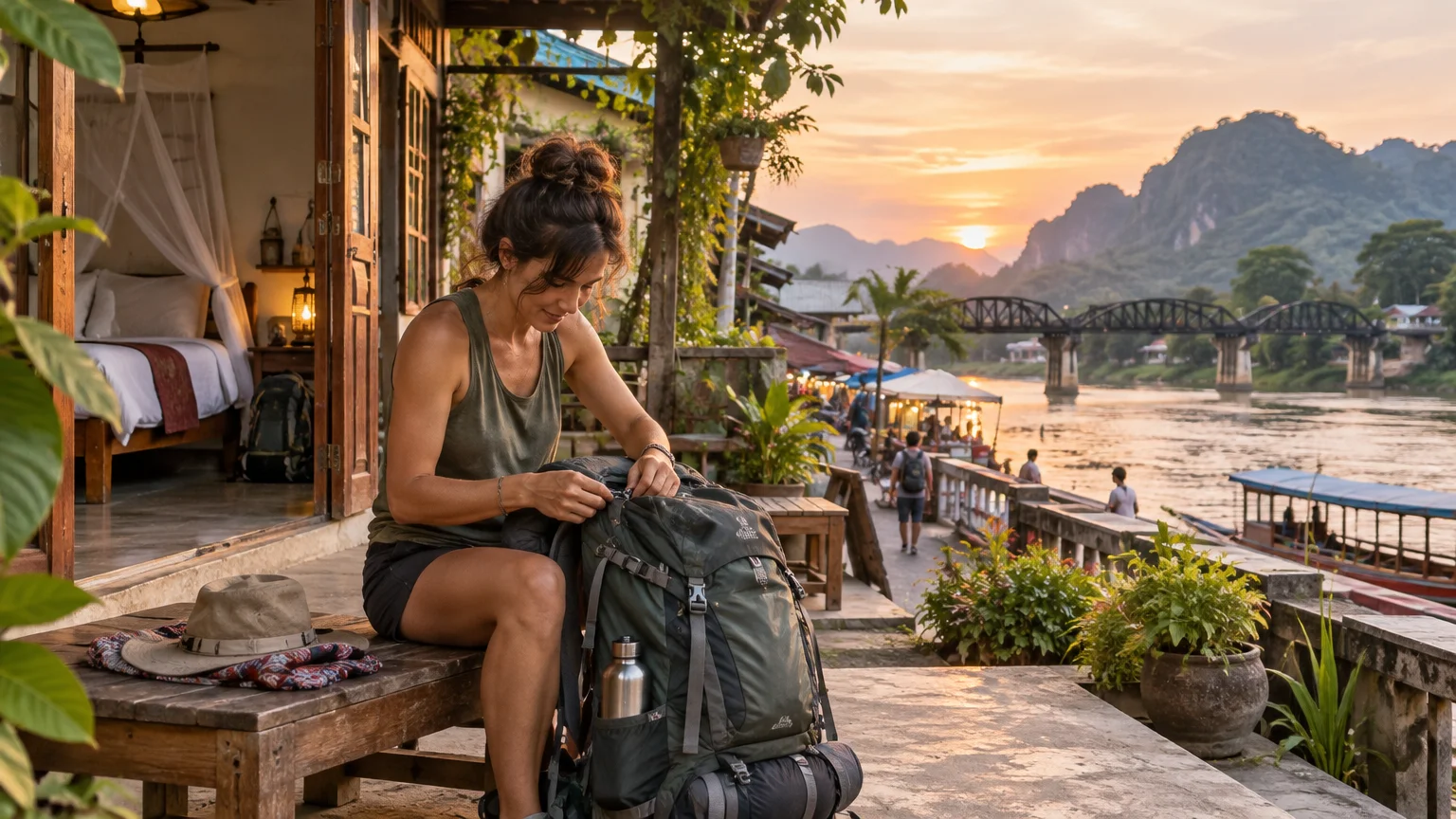
Kanchanaburi Travel, Budget Guesthouses and Southeast Asia Guides
Make practical lodging, transport and day-to-day travel decisions in Southeast Asia, with Kanchanaburi as a starting point.
Practical Choices for Independent Trips
Kanchanaburi travel gets easier when you know which details deserve attention before booking. This publication covers practical decisions around simple accommodation, local transport, daily costs, food, connectivity and arrival planning across Kanchanaburi and Southeast Asia. It is for backpackers, solo travelers, couples, long-trip planners and anyone comparing a guesthouse, hostel or inexpensive hotel. The focus stays on the small choices that shape the day after you arrive: where the room is, how late you can check in, and whether getting around will cost more time or money than expected.
Use this publication to weigh lodging without treating every low rate as a bargain. A room’s ventilation, street noise, floor level, breakfast hours, reachable power outlets and walk to transport can alter its real value. Coverage also helps readers make sense of neighborhoods, day trips and ordinary routines, from finding a first meal after arrival to keeping cash, mobile data and onward travel from becoming avoidable problems. The aim is not to over-plan every hour; it is to identify the details worth checking while there is still an easy alternative.
Find the Right Starting Point
Start with lodging guidance when you are choosing where to stay or comparing rooms that look similar online. Turn to transport and destination coverage when you know your base but need to plan an arrival, onward journey or independent outing. Broader trip-planning guidance is useful for linking those choices across a longer route, including first-night needs, mobile data, cash access and compact packing. Each subject is most useful when it helps solve the next real decision rather than adding another generic checklist.
For Kanchanaburi, begin with your accommodation’s location and the places you intend to visit. Riverfront atmosphere, town-center convenience and access to departure points create different trade-offs, especially after dark or early in the morning. Apply the same approach elsewhere in Southeast Asia: map the stay, verify transport details, note likely extra costs and allow for delays. Schedules, fares, entry rules, seasonal access and accommodation policies can change, so confirm any detail that could disrupt the day if it is wrong.
Latest Practical Travel Guides
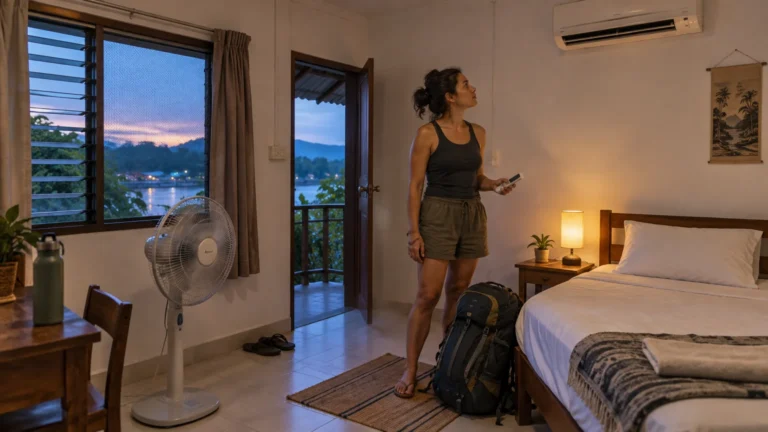
Fan Room vs AC Room for Sleep Quality, Not Just Temperature
A fan room can save money in Thailand, but airflow, shade, floor level and sleep quality matter more than…
Read more
Guesthouse Breakfast Included: Value or Just Convenience?
An included guesthouse breakfast can save money and morning hassle, but only when the actual meal, service hours and…
Read more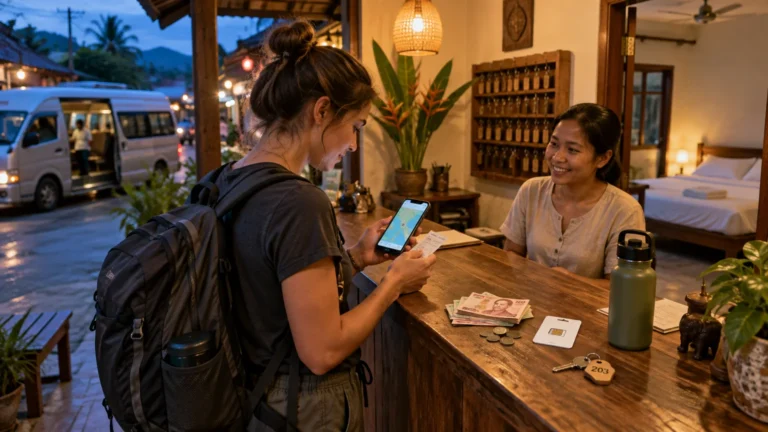
The Budget Traveler’s Arrival Checklist: Cash, SIM, Transport, Food, and Sleep
Make the first six hours of a Southeast Asia trip easier with a practical checklist covering immigration, mobile data,…
Read moreSpend Carefully, Travel More Easily
A cheap room can become expensive if its location adds repeated transport costs, or if an awkward arrival leads to an unnecessary taxi and a rushed booking. This publication treats a budget as a set of connected decisions, balancing price against time, comfort, flexibility and the practical demands of the route. That makes it easier to spot when a modest upgrade is worthwhile and when an advertised extra is not likely to improve the trip.
Budget travel does not need to mean stripping away spontaneity. It means handling the essentials well enough that there is room for local meals, unplanned stops and slower days. Start with the decision immediately in front of you, whether it is a place to sleep, a route to take or a bag to pack. Then confirm the facts that can change and leave enough margin for the parts of travel that rarely run exactly to schedule.